By SUNIL DUTT
As Prime Minister Narendra Damodardas Modi turns 75 on September 17, 2025, India reflects on the extraordinary journey of a leader who has reshaped the country’s political, social, and global narrative. From a modest beginning in Vadnagar, Gujarat, to the PM’s office, Modi’s life symbolizes perseverance, grit, and a vision of transformation.
From Tea Stall to the Nation’s Helm
Born in 1950 in the small town of Vadnagar, Gujarat, Narendra Damodardas Modi’s early life was shaped by modest means and economic hardship. As a young boy, he often assisted his father at a tea stall on the local railway platform, an experience that not only instilled in him the values of hard work and perseverance but also kept him deeply connected to common masses and their everyday struggles.
Modi’s connotation with the Rashtriya Swayamsevak Sangh (RSS) during his youth played a pivotal role in shaping his ideological outlook and organizational discipline. The RSS provided him with a platform to understand grassroots mobilization, volunteerism, and the importance of nation-building. From there, he transitioned into active politics with the Bharatiya Janata Party (BJP), where his dedication and strategic skills helped him rise steadily through the ranks.
In 2001, Modi assumed the role of Chief Minister of Gujarat, a position he held for over a decade. His governance model, which emphasized infrastructure, industrial growth, and investment, attracted both national and international attention. In 2014, he led the BJP to a historic parliamentary majority and was sworn in as India’s 14th Prime Minister.
Transformative Milestones
Modi’s decade in power has been defined by sweeping reforms and decisive policies that have left a deep imprint on India’s governance:
Swachh Bharat Mission: A nationwide cleanliness drive that improved sanitation, reduced open defecation, and instilled civic awareness.
Financial Inclusion: Initiatives like Jan Dhan Yojana, Ujjwala LPG connections, and Pradhan Mantri Awas Yojana expanded welfare outreach to the poor.
Healthcare and Digital Push: Ayushman Bharat widened healthcare access, while digital governance initiatives boosted transparency and efficiency.
Policy Reforms: The introduction of the Goods and Services Tax (GST) and rapid investment in highways, renewable energy, and ports accelerated modernization.
Revocation of Article 370 (2019): A landmark decision that removed Jammu and Kashmir’s special status, integrating it more firmly into the Indian Union.
Ram Mandir Construction (2024): The inauguration of the temple at Ayodhya fulfilled a long-standing cultural and political promise.
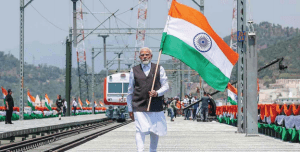
Chenab Rail Bridge: The construction of world’s highest railway bridge.
Leadership in Crises
Modi’s tenure has also been shaped by crises where his leadership has been tested. During the COVID-19 pandemic, he oversaw the world’s largest vaccination drive and launched relief measures under the “Atmanirbhar Bharat” initiative for self-reliance. In Operation Sindoor (2025), India carried out precision airstrikes on terrorist infrastructure across the border, reinforcing its defense posture and sending a strong message globally.
Global Diplomacy and Rising Influence
On the world stage, Modi has stretched out India’s profile through active diplomacy and soft power. His government’s leadership of the G20 presidency, outreach to the Indian diaspora, and strengthening of ties with major powers have positioned India as a rising global leader. From climate negotiations to digital innovation, India’s voice carries greater weight internationally under his leadership.
The Road Ahead
As he enters his 75th year, Modi stands at a critical juncture. His legacy is already etched in milestones of governance and global recognition, but challenges remain — ensuring inclusive growth, addressing climate change, managing social harmony, and driving innovation in a rapidly changing world. The coming years will determine whether he can balance bold vision with inclusive progress, shaping not just his legacy but the future trajectory of India itself.
(The writer is a Sub-Editor at the Northlines, Jammu)