Puran Chand Sharma
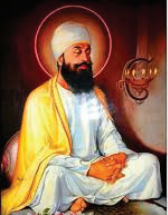
While navigating through history we observe that in the early 1670s, religious persecution intensified under Aurangzeb and Kashmiri Pandits living in Kashmir were severely threatened for forced conversions. Accordingly they decided to seek Guru’s protection from persecution of Aurangzeb. Guru Teg Bahadur Ji responded with a bold moral stand: “If the rights of the weak are to be defended, let me be the one to stand for the weak.”
Accordingly he chose to travel to Delhi and openly challenged the tyranny by refusing to bend and convert. There is a very interesting and inspiring anecdote related to Guru Gobind Singh Ji when he was hardly 8 years old sitting beside his father, Guru Teg Bahadur ji, telling his beloved disciples that the prevalent difficult circumstances call for sacrifice of a great personality to arouse the passion and emotions of our people to arise and launch powerful counter assault against the tyrannical Mughal empire.
On hearing this statement of his father Guru Teg Bahadur ji, young Gobind Singh Ji spoke, “Dear father, at this critical time, there is none in the country greater in stature than you to accomplish this critical mission to retrieve the country from the cruelest tyranny of Mughals.
Guru ji hugged the young Gobind ji and the audience around got astonished and enthused as well. Revered Guru Ji travelled to Delhi and openly challenged tyranny by refusing to convert. The brutal execution of his three devoted disciples, Bhai Mati Das, Bhai Sati Das, Bhai Dayal Das did not break his resolve.His own beheading at Chandni chowk symbolized the victory of moral courage over authoritarian force. His martyrdom was not a defeat but a defense of India’s civilizational values such as pluralism, freedom of conscience and the dignity of every human being. Guru Gobind Singh Ji later declared that no greater sacrifice had ever been made in the history of humanity.
350th. Anniversary Of Martyrdom, National Celebrations And Global Recognition
The 350th anniversary of Guru Teg Bahadur Ji’s supreme sacrifice is being commemorated across India and abroad with great reverence. Key features of the celebrations include:
1. Nationwide Events
Government bodies, Sikh organizations and cultural institutions are conducting seminars, conferences and exhibitions on Guru ji’s life and his teachings. Kirtans samagams at major gurdwaras including Sis Ganj Sahib and Rakab Ganj Sahib, heritage walks, book release functions and display of digital archives on the Guru Ji’s travels are being organized.
2. Educational Initiatives
Schools and Universities are hosting special assemblies, essay competitions, plays and theatre adaptations on the Guru Ji’s martyrdom, besides inclusion of updated chapters in History and moral education curricula of India.
3. Global Commemorations
Indian missions abroad, Sikh diaspora groups and interfaith organizations are holding prayer meets, organizing interfaith dialogues on religious liberty and launching documentary projects and online exhibitions.
4. Cultural and Heritage Projects
Restoration and beautification of sites connected with Guru ji, such as Ggurdwara Sis Ganj Sahib (Delhi), Gurudwara Rakab Ganj Sahib, Anandpur Sahib are under way with special illumination of these sacred places. Pilgrim services and virtual tours are being conducted to enable more and more people to participate.
5. Publications and Digital Outreach
New translations of Guru Ji’s hymns, illustrated biographies, podcasts and curated on-line content are being undertaken to allow the younger generation to understand his universal message. These celebrations reflect not only reverence but also a renewed commitment to uphold the values for which he sacrificed his life.
Significance of Celebrating the 350th Martyrdom Anniversary of Guru Tegh Bahadur Ji
Three and half centuries later, Guru Teg Bahadur Ji’s message remains perfectly relevant even today and stands as one of the most profound commemorations in India’s civilizational journey. It is not merely a historical remembrance but a national reaffirmation of values and extreme sacrifice. His martyrdom on 24th November, 1675 is one of the most remarkable sacrifices in world history. It is unique because he laid down his life to protect the oppressed and to preserve the right of all to follow their respective faiths and persecute none. Remembering and celebrating the 350th Anniversary of his heroic act allows India and the world to revisit the universal values he embodied and lived for.
1. The Universal Guardian of Freedom of Conscience
Guru Teg Bahadur Ji is rightly remembered as ‘HIND DI CHADAR’, The Shield of India. When a large group of Kashmiri Pandit’s approached him with the plea to show the way that could protect them from persecutions and forced conversions, he chose to offer himself for the Supreme Sacrifice rather than accepting conversion and thus, defended the rights of the persecuted to practice their faith. His matchless sacrifice set an eternal benchmark for freedom of conscience, religious liberty and human dignity. Celebrating 350 years of Guru Teg Bahadur Ji’s martyrdom reminds humanity that true spirituality lies in protecting others, even at the cost of one’s life.
2. Strengthening India’s Civilizational Identity
Guru Teg Bahadur Ji’s Martyrdom is not confined to Sikh History alone. It is an integral part of India’s civilizational narrative. His stand against tyranny preserved the spiritual and cultural fabric of India during a turbulent period. The anniversary reaffirms that India’s strength lies in respect for diversity and the courage to defend Dharma when threatened. The celebrations become a reminder of India’s timeless commitment to justice, pluralism and harmony.
3. A Beacon of Moral Courage
Guru Teg Bahadur Ji’s confrontation with Mughals showed unparalleled fearlessness. He accepted torture and execution rather than compromise with injustice. His example teaches that courage is not aggression but it is firmness in truth, compassion and righteousness. The 350th anniversary invites citizens, especially youth to reflect on moral bravery, integrity and the value of standing up for the weak.
4. Spiritual Enlightenment and Global Message
Guru Teg Bahadur Ji’s Baani in Guru Granth Sahib lays emphasis on peace, detachment, humility and the futility of ego. His Martyrdom represents the ultimate expression of spiritual maturity and complete surrender to divine will.
The anniversary celebrations by virtue of Kirtans, Seminars, exhibitions and global outreach help spread his message of Nirbhau (fearlessness), Nirvair (universal compassion) across the world.
5. Reviving Sikh Heritage and National Memory
The 350th anniversary mobilizes communities to preserve historical sites, manuscripts, artifacts and oral traditions connected with the Guru. This strengthens cultural continuity and deepens collective memory. Schools, Universities and other Institutions must use the occasion to educate our youth about Guru Ji’s teachings and the historical significance of his great sacrifice.
Conclusion
Celebrating the 350th Martyrdom Anniversary of Guru Teg Bahadur Ji is a humble tribute to one of the greatest defenders of human dignity in history. His sacrifice proved to be a turning point pulling the Nation out of contemptuous inertia. India pays homage not only to Guru Ji, but also to the timeless ideals that define her civilizational soul.
Wahe Guru ji.
(Author is President of Ved Mandir, Amphala, Jammu)