By Arun Srivastava
The uprising of the Nepali youth on September 9 and 10 leading to the ouster of the KP S Oli government, does not simply manifest their anger and frustration against the rulers of the Himalayan country, instead points to a deeper and gangrenous like malaise that afflicts it. To describe the movement as peoples’ upsurge against corruption, nepotism and failure of governance, will be too simplistic evaluation. It exposes the cumulative outburst of the suppressed feeling of class hatred and exploitation of the 75 per cent scheduled caste (Dalits) by the upper caste Brahmins and Rajputs who constitute 20 per cent of the population.
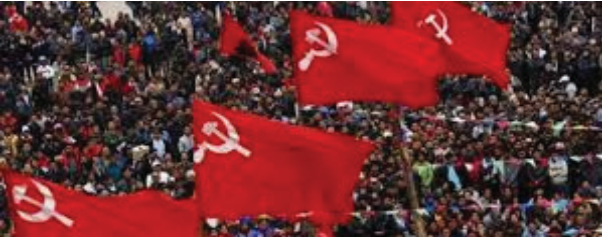
Once the Maoists came to power, it was envisaged that their exploitation and repression would become matters of past. But it proved to be a mirage. Like any capitalist party, the Maoists leaders got involved in petty personal skirmishes and did not articulate the feelings of the people. Like other Nepali parties, the Maoist outfit was controlled and run by the upper caste Brahmins. While they failed to articulate the feelings of the Zen Z, they also did not strive to connect with them.
Generation Z emerged in late 1990s and early 2010s, characterized as the first generation of “digital natives” which grew up with the internet and smartphones. Even Maoists couldn’t contain the Gen Z movement because the movement was driven by young, tech-savvy individuals who used social media and had a clear, decentralized focus on anti-corruption and freedom of speech, quite apart from traditional Maoist ideology. They have no love for Maoism or Marxism.
Failure of the Nepali Maoists to communicate with the youth also implies that they have, like the Indian Communist parties, lost connect with the younger generation. The leadership did not endeavour to understand the demands and thinking of this generation. Rather, they followed the old course without trying to adapt the ideology to bring in the youth in the communist movement.
After Bangladesh students’ protest in July/August 2024, this was the major agitation which shook Nepal without being led by a popular leader. It was the collective student leadership that created havoc. The protests were sparked by a government ban on social media. The Gen Z which had taken to streets took it as an affront and a strategic move of the ruling elite to conceal the facts about the corrupt practices of the politicians that were coming out in social media. It is widely known that issue of corruption, nepotism and flawed governance resonated strongly with youth who were concerned of their rights, freedom of expression, and future opportunities.
Yet another intrigue that has been making round is the role of the US in triggering the student protest. US has been keen to use an important south east country. But with Oli, having cordial relation with China, it was not getting the opportunities it needed. Millennium Challenge Corporation (MCC) a US group advocating for human rights and religious freedom has already been active in Nepal for some years. The movements are also fueled by competition between India and China for strategic influence in Nepal.
Nepal’s population has a large median age of 25, the Gen Z. This in the past had provided a strong base of support to the Maoists to come to the power. In the beginning they had started in a peaceful manner. Their core message was about democratic principles and ending corruption, making it a difficult narrative for the ruling Maoists to intervene. The movement would not have gathered so much of intensity and strength if the government would not have tried to gag the peoples’ voice through banning the social media. This is a warning to Indian rulers too who think use of ruthless state power is the only panacea to curb the peoples’ protest. The ban was viewed by protesters as a form of censorship that infringed upon their rights to freedom of speech and expression. The killing of 19 protesters on September 9 gave national dimension to the movement which went berserk the next day on September 10 leading to the burning of the minister’s houses including private house of the prime minister.
Like India, large scale Nepali students and youths are migrating to foreign countries. Young people feel “shut out of opportunities,” at home. The situation got aggravated with “Nepo Kids,” children of politicians, flaunting wealth and privilege on social media. Nepal is facing acute poverty and unemployment. According to the Nepal Economic Forum, around 7.5 per cent of the country’s population lives and works abroad, more than two million people. Twenty percent of Nepalese between the ages of 15 and 24 years old are unemployed, compared to 8.2 percent of the general population, according to the World Bank.
Gen Z does not see light at the end of the tunnel. People nurse the view that almost all the political parties have turned mafia and surviving at the mercy of the big business. Nepali people have been surviving on the remittances sent from abroad by their family members. Large number of Nepali people are migrating in search of livelihood.
Nepal’s growth has been stabilized by remittances. In FY 2024/25, the Department of Foreign Employment issued 839,266 labour permits—staggering out-migration for a country of ~30 million. Remittances hovered around 33 percent of GDP in 2024, among the highest ratios worldwide. Experts find a parallel to what is happening in Nepal with Bangladesh and Sri Lanka’s Aragalaya: school and college students in uniform, unemployed graduates, labourers and disillusioned public converging around a shared verdict on misrule.
Under the historical Hindu monarchies, particularly those led by Brahman and Rajput rulers, the Dalit (SC) people in Nepal faced widespread discrimination, ostracism, and exclusion due to the caste system, which legally enforced hierarchies and restricted their rights. The traditional caste system in Nepal, which was heavily influenced by and associated with Brahman and Rajput rulers, placed Dalits at the bottom of the hierarchy.
They were subjected to practices like segregation, restrictions on the use of public wells and streets, and denial of access to social and religious events. The Brahmans and Rajputs, as the dominant high-caste groups, largely controlled the social and political structures. Historically, caste and caste based exclusion is a very strong social structure and practices in the Hindu society that influences the aspects of economic, political and cultural spheres of the people’s lives.
Nevertheless the new political pattern of some individuals emerging as the converging point of people’s anger and frustration ought to be analysed seriously. Does it imply all the other ideologies and isms have turned irrelevant in the present day Nepal? In Nepal Balendra Shah, a rapper and current mayor of Kathmandu has come to represent the peoples anger and frustration. The Nepalese army is still talking with the generation Z leaders. The next few days will show whether there is some light at the end of the Nepalese tunnel. (IPA Service)