Jammu Tawi, Jan 18: Jammu and Kashmir is witnessing a renewed wave of infrastructure-led development, with projects worth lakhs of crores being implemented across key sectors, Chief Secretary Atal Dulloo said on Saturday.
In an interview, Dulloo said development momentum in the Union Territory has accelerated significantly in recent years and is expected to continue. He outlined that 61 major development works, with a total investment of Rs 4.12 lakh crore, are currently being monitored under the Project Monitoring Group (PMG).
“These projects span sectors such as connectivity, energy and social infrastructure. Of these, 15 projects worth Rs 69,000 crore have already been completed, while 46 projects involving Rs 3.43 lakh crore are under execution,” he said.
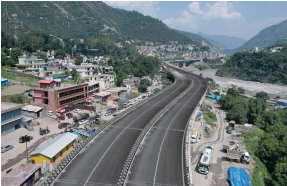
Highlighting connectivity as a major achievement, Dulloo said railway access to the Kashmir Valley has become a reality with the operationalisation of train services on the Udhampur–Srinagar–Baramulla rail link following the completion of the Chenab rail bridge. He added that several allied projects are progressing steadily.
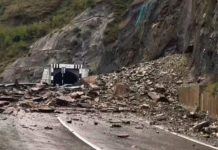
“The long-cherished dream of rail connectivity to Kashmir has been fulfilled under the leadership of the prime minister,” he said, adding that multiple road projects, tunnels and alternate connectivity corridors are also underway. Among these is the Sadhna Pass tunnel, aimed at improving access to border and remote areas in North Kashmir.
Under the Pradhan Mantri Gram Sadak Yojana, projects worth around Rs 4,300 crore are being implemented to strengthen rural road connectivity, with additional proposals already submitted to the Centre.
In the power sector, Dulloo said initiatives under the Revamped Distribution Sector Scheme (RDSS) are focused on reducing transmission and distribution losses and ensuring reliable power supply in far-flung areas. Power generation projects are also being fast-tracked to support long-term growth.
On hydropower, he said the decision to keep the Indus Water Treaty in abeyance has removed earlier restrictions, helping accelerate projects such as Pakal Dul and Kishanganga.
Dulloo noted that incentive packages have attracted major business groups to the Union Territory and said tangible outcomes would be visible as these initiatives become fully operational.
In health and urban development, he pointed to the construction of critical care blocks, new hospitals and medical colleges, along with the expansion of services through tele-ICU and tele-radiology. “Our focus is on delivering advanced healthcare services at district hospitals and secondary-care institutions,” he said.
In the education sector, technology-driven monitoring systems and the development of model schools are expected to significantly improve learning outcomes.
Calling 2026 a “concrete engine of growth,” Dulloo said emphasis on tourism, industry, agriculture, skill development and employment generation is central to addressing unemployment and preventing social challenges.
He also highlighted the Pro-Active Governance and Timely Implementation (PRAGATI) platform as a key tool for fast-tracking large projects by resolving bottlenecks through close Centre–UT coordination, placing Jammu and Kashmir among the top-performing regions nationally.
Dulloo said the introduction of new criminal laws and labour reforms were among the most significant policy interventions in 2026. He added that migrant rehabilitation remains a national concern, with government policies focused on relief, rehabilitation and dignified reintegration.