Defence preparedness against Pakistan gets a fresh boost
By Girish Linganna
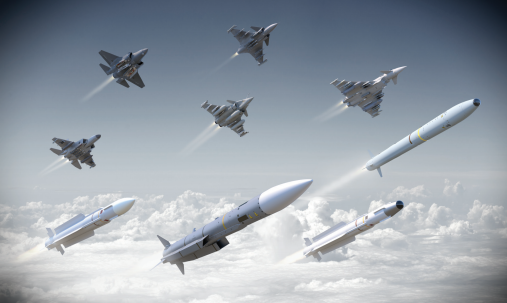
India is set to purchase Meteor long-range air-to-air missiles worth USD 180 million (approximately ₹1,500 crore) in a game-changing move that will significantly boost the country’s air combat capabilities. These advanced missiles will be fitted on Rafale fighter jets, giving India a decisive edge in air battles across South Asia. The deal, awaiting Defence Ministry clearance, demonstrates India’s commitment to maintaining air superiority against Pakistan and China in high-altitude conflicts. The Meteor missile, manufactured by European company MBDA (Matra BAE Dynamics Alenia), is among the world’s most advanced and lethal air-to-air weapons. Using BVRAAM (Beyond Visual Range Air-to-Air Missile) technology, it can strike enemy aircraft from extremely long distances, even when targets are invisible to the pilot.
This purchase comes amid rising regional tensions, with China’s ongoing border standoff in Ladakh and Pakistan Air Force’s frequent flights near the Line of Control. As neighbouring countries deploy fifth-generation fighters with advanced missile systems, India’s move reflects its focus on preparedness and strong deterrence. The deal will replenish India’s depleted stock after years of training and operations, with several hundred Meteor missiles expected to boost combat readiness and enable prolonged operations without weapon shortages. The missile deal will be conducted directly between Indian and French governments along with MBDA, bypassing lengthy tender procedures for quick delivery.
The Meteor missile’s technical specifications make it a true game-changer in modern air warfare. The missile measures 3.7 meters in length, 18 centimetres in diameter, and weighs approximately 190 kilograms—designed to balance devastating power with portability across different fighter platforms. What truly sets it apart is its performance capability: the Meteor flies faster than Mach 4, which translates to approximately 4,900 kilometres per hour, while maintaining this incredible speed over very long distances. Its operational range extends beyond 200 kilometres, with some experts confirming strikes up to 300 kilometres under optimal conditions. The missile’s no-escape zone exceeds 60 kilometres, meaning once fired, enemy aircraft within that range simply cannot dodge or escape destruction.
The Meteor uses revolutionary ramjet propulsion technology that continuously provides power throughout its entire flight, unlike conventional solid-fuel missiles that decelerate after their initial fuel burns out. This ramjet engine can regulate its power during flight, providing steady speed and thrust right until target impact. According to Defence Security Asia, the missile features an active radar seeker—a built-in radar system that automatically finds and locks onto enemy aircraft independently—combined with a sophisticated two-way data link that enables real-time communication with the launch aircraft. This allows the missile to receive mid-flight updates, change direction if needed, and penetrate deep into enemy airspace even when adversaries attempt electronic jamming. For its destructive capability, the Meteor carries a high-explosive blast-fragmentation warhead that explodes into deadly fragments, triggered by a radar proximity fuse which detonates when approaching the target. This design ensures exceptional probability of destroying even fast-manoeuvring fighters or stealth aircraft.
Currently exclusive to Rafale jets, HAL (Hindustan Aeronautics Limited) is studying integration onto India’s Tejas Mk 1A and Mk 2 fighters. If successful, this would extend the Meteor’s powerful range across more IAF jets, complementing indigenous Astra missiles. The IAF operates two Rafale squadrons and may add a third under the MMRFA program, potentially bringing 114 additional jets. With each Rafale carrying four Meteor missiles, adequate stockpiling is crucial for sustained combat operations. The upcoming Rafale F4 upgrade will significantly enhance threat detection and information sharing through integrated sensors and onboard computers. It will enable coordinated Meteor launches using artificial intelligence to prioritize dangerous targets, creating the IAF’s most advanced long-range air-to-air combat system with greatly improved first-shot kill probability.
India joined the Meteor system through the 2016 Rafale deal with France worth USD 8.5 billion (₹74,800 crore), receiving about 250 Meteor missiles for its first 36 Rafale fighters equipped with RBE2-AESA radar and SPECTRA electronic protection. Delivered to Ambala, Haryana and Hasimara, West Bengal squadrons, they form the IAF’s frontline strength. By 2021, successful testing during French Air Force joint exercises proved seamless integration with Rafale’s advanced systems. The IAF demonstrated this capability during 2020-2021 border tensions with China along the Line of Actual Control, where Rafale jets armed with Meteor missiles effectively deterred Chinese Air Force incursions. The mere presence of these weapons was enough to prevent any Chinese air intrusion, providing strong psychological and tactical advantage.
During Operation Sindoor in 2025, the IAF conducted powerful strikes against terror launchpads and Pakistani military targets. Rafales armed with Meteors destroyed important targets from long distance without entering Pakistan’s radar range, forcing a ceasefire within days. Pakistan’s JF-17 Block III jets armed with Chinese PL-15 missiles couldn’t enter Indian airspace, clearly demonstrating Meteor’s superior speed, range, and tracking ability. In 2023, India expanded Meteor capability by ordering 26 Rafale-M fighters for the Indian Navy, operating from INS Vikrant and INS Vikramaditya, extending missile power to aircraft carriers and creating unified air combat capability across services.
Alongside foreign procurement, India accelerates indigenous Astra missile development under DRDO. Astra Mk 1 is operational, while Astra Mk 2—hitting targets beyond 200 kilometres using dual-pulse propulsion that fires the motor twice for sustained energy—enters mass production in 2025. Plans for over 700 Astra missiles for Su-30MKI and Tejas jets provide cost-effective alternatives, ensuring India doesn’t depend on single suppliers while building indigenous technology strength under Atmanirbhar Bharat. The Meteor-Astra combination provides two-level air combat advantage—Meteor for high-priority first strikes where maximum range and no-escape capability are essential, and Astra for large-scale deployment and fleet-wide defence.
Against Pakistan, the IAF can now shoot down F-16 and JF-17 jets before they’re close enough to fire back, creating no-entry zones along western borders as strong deterrence. Against China, Meteor provides crucial edge in high-altitude battles where Chinese jets struggle with reduced payload in thin air. Its steady ramjet thrust performs strongly in Himalayan conditions where other missiles lose power, enabling effective engagement from mountain bases. The sustained-energy advantage means it maintains full speed and striking power in the final flight phase, especially when chasing fast retreating targets at long range, while competitors like America’s AIM-120D and China’s PL-15 lose momentum and become less effective.
Integration with AWACS radar aircraft and aerial refuelling creates connected battle networks tracking and attacking targets far beyond normal radar limits. Strategically, Meteor brings India closer to Quad partners—United States, Japan, and Australia—who share similar capabilities, improving joint training and Indo-Pacific operations countering Chinese aggression. Despite challenges like rising costs and delivery delays, strategic benefits far outweigh concerns. The Meteor was jointly developed by six European countries—UK, France, Germany, Italy, Spain, and Sweden—entering service in the mid-2010s and transforming long-distance air combat worldwide.
In today’s world where air superiority decides national security, India’s Meteor adoption shows clear vision and firm deterrence commitment. This isn’t just buying weapons—it demonstrates India’s strategic thinking and technological confidence. By combining Rafale agility with Meteor’s deadly range and sustained power, India builds powerful deterrence protecting from the Indus region to Indo-Pacific. In this high-stakes air battle game, India has now secured its most powerful piece—like winning the queen in chess. (IPA Service)