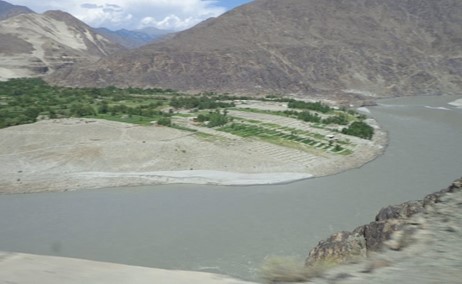
New Delhi, Sep 25, 2025: India is preparing to undertake ambitious projects to divert and utilize its share of Indus River water for northern states, following the suspension of the Indus Water Treaty with Pakistan. The move aims to strengthen water security and meet rising irrigation and drinking water demands.
A 14-km tunnel connecting the Indus River with the Beas River is at the center of the plan. The detailed project report (DPR) for the tunnel is being prepared by Larsen & Toubro (L&T) and is expected by next year. The tunnel, using tunnel boring machines and rock shield technology, will connect to the Ujh Multipurpose Project in Kathua district to transfer water from the Ujh River, a Ravi tributary, into the Beas Basin. The estimated cost is Rs 4,000–5,000 crore, with completion expected by 2028.
Additionally, a 113-km canal is proposed to deliver Indus water to northern states, linking the Chenab River to the Ravi-Beas-Sutlej system and ultimately connecting to the Indira Gandhi Canal in Rajasthan. This will enhance irrigation in arid regions and provide drinking water to Delhi, Punjab, Haryana, Rajasthan, and Jammu & Kashmir.
The project also includes plans to extend the Ranbir Canal in Jammu from 60 km to 120 km. According to officials, these measures will prevent excess water from India’s share from flowing into Pakistan, addressing both water security and strategic concerns.
The initiatives fall under the Inter-Basin Indus Water Transfer Scheme and are being monitored at the highest levels of government. Officials say the project will also mitigate climate change impacts, manage changing rainfall patterns, and strengthen existing canal systems across northern India.
Sources indicate that the tunnel will be constructed in separate sections, with detailed geological studies to determine whether traditional tunneling or piping is required based on rock strength.