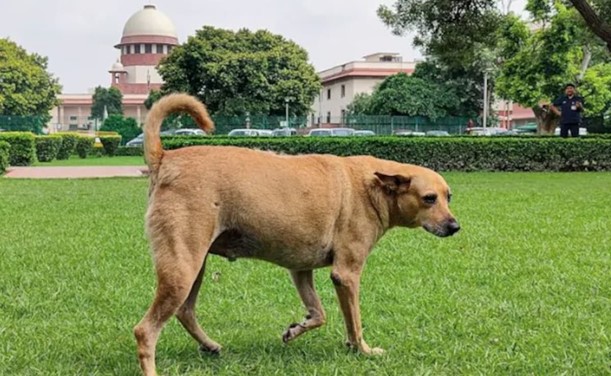
New Delhi: The Supreme Court on Wednesday expressed serious concern over the presence of stray dogs on highways and public roads, observing that they pose safety risks and can cause accidents, while hearing a batch of interlocutory applications in the ongoing stray dogs case.
A three-judge bench of Justices Vikram Nath, Sandeep Mehta and N.V. Anjaria said it is impossible to predict an animal’s behaviour, remarking that “no one can read the animal’s mind” and stressing that “prevention is better than cure.” The bench asserted that roads must be “clear and clean of dogs,” noting that even if dogs do not bite, they can still lead to accidents.
Questioning the implementation of the Animal Birth Control (ABC) Rules, the bench referred to directions issued in 2018 and asked what progress had been made so far. “Just because the government is not properly implementing the ABC rules, should the common man be left to suffer?” the court asked, while posting the matter for further hearing on Thursday.
Senior advocate Kapil Sibal, appearing for the petitioners, submitted that unruly or aggressive dogs could be picked up, sterilised and released back into the area. Responding sharply, the bench remarked that the only thing missing in such a mechanism was “counselling to the dogs” so that they do not bite after being released. The judges underlined that the concern was not limited to dog bites but also accidents caused when dogs run onto busy roads.
When Sibal argued that dogs are usually inside compounds and not on roads, the bench disagreed, saying the information appeared outdated and reiterating that public roads must be kept free of stray dogs in the interest of safety.
During the hearing, Solicitor General Tushar Mehta, representing the Centre, suggested that Residents Welfare Associations (RWAs) should have the authority to decide whether dogs should be allowed inside gated societies. While describing himself as an animal lover, Mehta said human safety and convenience must also be prioritised.
The court’s observations come against the backdrop of rising dog bite incidents. On November 7 last year, the apex court had ordered the removal of stray dogs from educational institutions, hospitals, bus stands, sports complexes and railway stations, directing that they be shifted to designated shelters and not released back at the same locations. The court had termed recurring dog bite incidents in institutional areas as a reflection of administrative apathy and systemic failure.
Earlier, in July last year, the Supreme Court had ordered that stray dogs in Delhi and adjoining regions be shifted away from residential localities to shelters, describing the situation as “extremely grim.” It had also warned of strict action against anyone obstructing authorities from picking up stray dogs, while clarifying that dogs suspected of rabies or displaying aggressive behaviour must not be released back even after sterilisation.
The court has also directed civic bodies to create dedicated feeding zones for stray dogs, making it clear that public feeding in open spaces would not be permitted and violations would invite strict action. (Agencies)