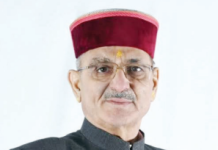
Shivanand Pandit
To combat the increasing backlog of criminal cases, the Supreme Court of India took a crucial step on January 30, 2025, by granting High Courts the authority to appoint retired judges on an ad-hoc basis. These judges will be specifically tasked with hearing criminal appeals and will serve on a Bench led by a sitting judge of the High Court. This move is part of the Court’s broader strategy to enhance the efficiency of the judicial system and accelerate the resolution of outstanding criminal cases.
The decision was delivered by a Bench consisting of Chief Justice of India (CJI) Sanjiv Khanna and Justices B.R.Gavai and Surya Kant. In their ruling, the Supreme Court eased a prior regulation set in the 2021 case Lok Prahari Through Its General Secretary S.N. Shukla IAS (Retd.) v. Union of India. In that judgment, the Court had imposed specific conditions for appointing ad-hoc judges, restricting such appointments to High Courts where judicial vacancies were above 20% of the sanctioned strength. However, the new ruling eliminates this 20% vacancy requirement, expanding the potential for appointing retired judges. With this adjustment, High Courts across India now have more flexibility in appointing retired judges to help manage their growing caseloads, particularly in criminal appeals. The retired judges appointed under this new provision will be assigned to work alongside sitting judges, ensuring that criminal cases continue to be heard in a manner consistent with judicial norms.
The CJI-led Bench observed that as of January 25, 2025, High Courts had 66 lakh pending cases, according to the National Judicial Data Grid. Among these, over 18.2 lakh were criminal cases, while more than 44 lakh were civil cases. Significantly, over half of these cases have remained pending for more than five years. Currently, 27% of criminal cases in high courts have been pending for 5 to 10 years, while 32% have remained unresolved for more than a decade. To address this backlog, the Court decided to remove the condition set in Lok Prahari, which allowed ad-hoc judge appointments only if judicial vacancies exceeded 20% of the sanctioned strength. The Court further ruled that ad-hoc judges may only hear criminal appeals and must serve as part of a Bench led by a sitting judge. Additionally, their number cannot exceed 10% of a High Court’s sanctioned judicial strength, limiting each High Court to 2 to 5 such appointments.
Throughout India’s judicial history, there have been only three recorded instances of ad-hoc judicial appointments, wherein retired judges were specifically appointed to high courts to handle particular cases of significance. These exceptional appointments occurred in 1972, 1982, and 2007, each serving a distinct legal necessity. The first such instance took place in 1972 when Justice Suraj Bhan, who had retired from judicial service, was appointed to the Madhya Pradesh High Court. His appointment was necessitated by the need to adjudicate election petitions, a matter of considerable legal and political importance at the time. A decade later, in 1982, a similar situation arose in the Madras High Court. Justice P. Venugopal was appointed on an ad-hoc basis after his retirement, underscoring the judiciary’s reliance on experienced legal minds to address complex cases that required expertise and impartial adjudication. The most recent instance of an ad-hoc judicial appointment occurred in 2007. Justice O.P. Srivastava was appointed to the Allahabad High Court with the specific responsibility of presiding over the Ayodhya title suits, one of the most contentious and historically significant legal disputes in India. His appointment reflected the judiciary’s commitment to ensuring that high-profile and sensitive cases were handled with the utmost care and judicial experience. These rare appointments highlight the Indian judicial system’s occasional yet crucial reliance on retired judges to address specific legal challenges, ensuring that matters of national and constitutional significance are adjudicated with wisdom and judicial prudence.
Article 224-A of the Indian Constitution introduced through the Constitution (Fifteenth Amendment) Act, 1963, facilitates the temporary or ad-hoc appointment of retired judges to High Courts. This provision aims to mitigate the issue of backlog and pending cases by leveraging the expertise of experienced former judges. However, such appointments require the explicit consent of both the retired judge and the President of India. Once appointed, these ad-hoc judges receive allowances as determined by the President and exercise the same jurisdiction, powers, and privileges as sitting High Court judges.
The process of appointing retired judges to High Courts is governed by the Memorandum of Procedure (MoP), which was formulated in 1998 following the Supreme Court’s decision in Supreme Court Advocates-on-Record Association v. Union of India (1993). This case led to the establishment of the collegium system for judicial appointments, under which a structured procedure must be followed for appointing retired judges on an ad-hoc basis. As per the MoP, once a retired judge gives consent to serve as an ad-hoc judge, the Chief Justice of the respective High Court initiates the process by submitting the name of the judge, along with the proposed tenure, to the Chief Minister of the concerned state. The Chief Minister then forwards the recommendation to the Governor, who, in turn, relays it to the Union Minister of Law and Justice. The Union Law Minister consults the CJI for advice before sending the recommendation to the Prime Minister. Upon receiving the Prime Minister’s approval, the matter is sent to the President of India for final approval. Once the President approves the appointment, the Chief Minister issues a formal notification in the Gazette of India, thereby making the appointment official.
The Supreme Court, in the Lok Prahari case, identified specific conditions under which the appointment of ad-hoc judges in High Courts may be deemed necessary. At that time, nearly 40% of judicial positions across all High Courts in the country remained vacant, leading to a significant backlog of cases. The Court also examined the recommendations of the Law Commission, as outlined in its reports from 1979, 1988, and 2003. These reports consistently advocated for the temporary appointment of retired judges as an effective strategy to manage and reduce the growing pendency of cases in the judiciary.
However, the Supreme Court also voiced concerns regarding the potential misuse of Article 224-A. It cautioned that reliance on ad-hoc appointments should not lead to a lack of action in making recommendations for regular judicial appointments. To address this, the Court ruled that ad-hoc judges should only be appointed when fewer than 20% of the vacancies in a High Court have been filled through the regular appointment process. Additionally, the assessment should take into account both the number of sitting judges and the proposals already under consideration for judicial appointments.
To ensure that ad-hoc appointments are made only when necessary, the Supreme Court outlined several “trigger points” that could justify the appointment of retired judges to a High Court. These include, but are not limited to, the following scenarios: High Vacancy Rate: If the number of vacant positions in a High Court exceeds 20% of its total sanctioned strength. Long-Pending Cases: If cases in a particular category have been pending for more than five years. Overall Case Backlog: If more than 10% of the total cases in a High Court have been pending for over five years. Low Case Clearance Rate: If the rate at which cases are being disposed of is lower than the rate at which new cases are being filed, thereby increasing the backlog.
To facilitate the smooth appointment of ad-hoc judges, the Supreme Court recommended that each Chief Justice of a High Court maintain a panel comprising retired judges as well as judges who are about to retire. This panel would serve as a pool of eligible candidates for ad-hoc appointments. The past performance of these judges, particularly in terms of the quality and quantity of their judgments, should be carefully evaluated before they are considered for appointment. Typically, ad-hoc judges should be appointed for a tenure ranging from two to three years. The Supreme Court also suggested that each High Court should have a minimum of two and a maximum of five ad-hoc judges at any given time. Furthermore, the entire appointment process should be completed within three months to ensure a swift response to judicial vacancies. In the Lok Prahari case, the Supreme Court ruled that ad-hoc judges should receive the same salary and allowances as permanent High Court judges, except pension benefits. Their remuneration would be drawn from the Consolidated Fund of India. Additionally, the Court emphasised that ad-hoc judges should either be provided with rent-free accommodation or granted a housing allowance equivalent to what is offered to permanent High Court judges.
Bottom Line
Article 224-A serves as an essential mechanism to tackle the issue of judicial vacancies and the backlog of cases in High Courts. However, the Supreme Court has laid down stringent guidelines to ensure that this provision is used judiciously and does not become a substitute for regular judicial appointments. By setting clear criteria for triggering ad-hoc appointments, maintaining a panel of eligible retired judges, and ensuring a structured process for their selection, the Court aims to balance efficiency with the long-term stability of the judiciary. The implementation of these measures is crucial in strengthening the Indian judicial system and ensuring the timely delivery of justice.
According to data presented in Parliament in December last year, as of November 21, 2024, high courts had 364 vacant positions out of a sanctioned strength of 1,122 judges. To dismantle the long-standing ‘tareekh pe tareekh’ (date after date) culture in the higher judiciary, a Supreme Court bench led by the CJI has taken bold steps in removing restrictions on high courts appointing ad hoc judges. A recent conference convened by the CJI to address the backlog also explored the possibility of setting up evening courts. If the ad hoc judge system gains momentum, it could prove to be a transformative reform and a landmark achievement of the CJI, whose brief tenure concludes in mid-May 2025.
The writer is a tax specialist, financial adviser, author, guest faculty and public speaker based in Goa. He can be reached at [email protected] or 9822983420