Ravi Rohmetra
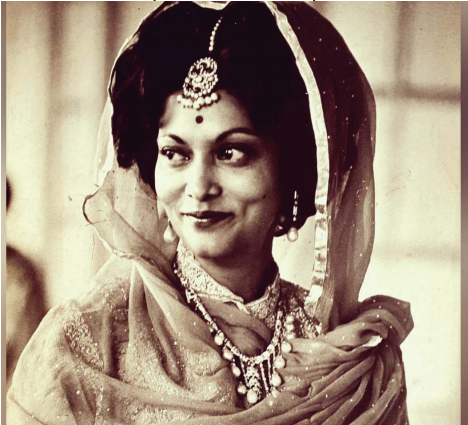
Maharani Yasho Rajya Lakshmi was blessed with a charming personality and a compassionate disposition, even towards the most ordinary people, which enhanced her stature manifold. Her love and affection for the needy and her deep concern for their welfare became her lifelong mission and led her to involve herself in numerous social activities.
24th May 2009 remains one of the saddest days for many people, particularly in Jammu & Kashmir, Nepal and Delhi, when Maharani Yasho Rajya Lakshmi, wife of Padma Vibhushan Maharaja Dr. Karan Singh Ji, left for her heavenly abode. Today, on her 13th death anniversary, her memories, passion and benevolence rekindle in our hearts with even deeper emotion, for she left behind an indelible mark on the social, cultural and intellectual life of India — a legacy that deserves the nation’s gratitude.
Maharani Yasho Rajya Lakshmi was an embodiment of beauty, prosperity, love and compassion, and a dedicated social worker devoted to the welfare of widows, orphans, the poor, the deaf and dumb, and other weaker sections of society. Born on 9 January 1937 into the royal family of Sir Mohan Shamsher Jang Bahadur, the last Rana Prime Minister of Nepal, she was the daughter of General Sharda Shamsher Singh. At the tender age of 13, on 5 March 1950, she was married to Prince Karan Singh Bahadur Ji, son of Maharaja Hari Singh, the Dogra ruler of Jammu & Kashmir.
The marriage symbolised a historic bond between two great royal lineages — the Kachwaha dynasty of Jaipur and the Sisodia dynasty of Udaipur. Adjusting to a new culture and language was not easy for the young Maharani, yet with dedication and the loving support of her husband, she soon mastered her responsibilities as both hostess and public figure. She learnt English, painting, Dogri and Hindi, and no one could later imagine that she had once been unfamiliar with these languages.
Alongside her personal life, Maharani Sahiba dedicated herself to social service in Jammu & Kashmir and Delhi, working tirelessly for the poor, widows, the blind, the deaf and dumb, mentally challenged children and the underprivileged. During the Indo-Pak war of 1965, she spent long hours with soldiers in difficult conditions, distributing essential supplies and offering moral support.
A devout disciple of Maa Durga, Maharani Sahiba lived with deep spiritual faith. In 1979, she and Dr. Karan Singh installed the idol of Nataraja in the Raghunath Temple complex in Jammu. She stood as a constant companion to Dr. Karan Singh during his demanding election campaigns in Udhampur and Kathua, winning the confidence and affection of women and elders alike.
Her leadership roles included:
– Founder of Ladies’ Clubs in J&K
– Chairperson, Delhi Hospital Welfare Society
– Organiser, J&K Dharmarth Trust
– Chairperson, Kashmir Women’s Industrial Units
– Chairperson, Maharaja Gulab Singh Memorial Trust
– Patron of organisations for the deaf, dumb and mentally challenged
Even after her physical departure, her service continues through the institutions she nurtured. Her untimely demise was a severe blow to the Dogra community and the state at large, an irreparable loss.
Monuments in Her Memory
- Yasho-Karan Park, inaugurated on 24 May 2012by former Delhi Chief Minister Smt. Sheila Dikshit at the historic Shri Rabireshwar Temple complex, in the presence of Dr. Karan Singh.
• Maharani Yasho Rajya Lakshmi Sanskrit Pathshala, established in 2013 at the reconstructed Shiv Mandir, Kankhal, Haridwar.
For six decades, Maharani Sahiba affectionately dominated the social and cultural life of Jammu & Kashmir with her rare grace, humility and inner strength. She remained deeply connected to the sentiments, aspirations and traditions of Duggar land, becoming a living symbol of Dogra culture and civilisation.
Her radiant smile, gentle words and compassionate presence were a soothing force in times of uncertainty. Her extraordinary ability to inspire, guide and organise people made her truly a queen with a difference. She has left behind a noble legacy for us to follow with determination and devotion.
In the end, I humbly say:
“Chaman mein gul khilte nahin sabhi ke liye,
Yahan bahaar aati hai kisi kisi ke liye;
Tumhare jaane ke baad andhera rahega mehfil mein,
Hazaaron chirag jalane padenge roshni ke liye.”
(Ravi Rohmetra is freelance writer and social activist and can be reached at (M) 94196-52999; Email- [email protected])