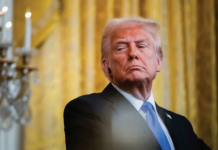
Outcome of four-day World AI Conference in Shanghai brings jitter to the Americans
By Satyaki Chakraborty
The four day World Conference on Artificial Intelligence which concluded in Shanghai on July 20 has established dominance of China in AI application as also in AI governance as large number of countries responded to the Chinese model of open source AI application thereby expanding scope for wider collaboration of China with the non western countries.
Chinese President Xi Jinping’s inaugural speech at the 2026 World AI Conference (WAIC) directly affirms the principles of the Global AI Governance Initiative, moving them from the theoretical realm to concrete, institutional steps. In his keynote address at the World Artificial Intelligence Conference (WAIC) in Shanghai, President Xi presented a clear vision centered on human-centered development and shared security, announcing the launch of new mechanisms to directly support developing countries through a number of initiatives.
The most important was President Xi’s announcement of the World Organization for Cooperation in Artificial Intelligence (WAICO) headquartered in Shanghai, after 29 founding countries, including Brazil, Russia, Pakistan, and Indonesia, along with 10 African and 12 Asian countries, signed the agreement to ensure fair and impartial governance. Further, China pledged to provide 5,000 AI training opportunities and seminar programs for the developing countries over the next five years..
The second important announcement was the setting up of Joint Regional Cooperation Centres to be set up in cooperation with League of Arab States, the African Union, ASEAN and the BRICS. This means this covers most of the Asian and the African countries within its fold. Further, the AI powered Chinese warning system will be available to 30 developing countries to protect their communities from climate change.
Chinese experts explain that their model is better suited to the western model to the developing countries since the Chinese model does not require the adoption of specific political and cultural values for the use of technology thus protecting the cultural and civilizational diversity of the Global South Apart, China’s A plus project focusing on integrating technology into traditional industries, agriculture and healthcare. By making open source code available, transferring expertise and training thousands of local professionals, the Chinese model allows the countries in the global South to be independent and reduce their dependence on the western monopolies which are always profitseekers.
According to the AI experts, President Xi raised four important proposals. First, we should adhere to the principle of openness and win-win and boost innovation-driven development. Second, we should strengthen risk-awareness and ensure that AI is secure and controllable. Third, we should encourage inclusiveness and promote mutual learning between civilizations. Fourth, we should advocate solidarity and improve global governance.
Following the 2023 proposal of the Global AI Governance Initiative, President Xi has once again comprehensively and systematically articulated China’s position and proposals regarding global AI governance. Focusing on the four dimensions of development, security, civilization and governance, he addressed major issues in the current landscape of global AI development and governance, contributing new insights and solutions to advancing global governance and bridging the AI and digital divides.
The historic AI conference has just ended with the promise of a future with more AI expansion in the developing countries. China will certainly make efforts to get political dividends from this major AI drive. President Trump is not expected to sit idle to see his rival President XI outsmarting him in AI domination. Trump will also have to work on an alternate strategy. But the problem with the US is that the US industry moves on the basis of profit. So it is difficult for US companies to compete with China where the AI industry is mostly state driven. But still Trump has to draw a counter strategy. What shape it will take, that is the million dollar question? (IPA Service)