Jammu, Srinagar, Shopian worst affected, Over 1 lakh cases reported since 2023
Arvind Sharma
Jammu Tawi, Mar 05: The number of patients suffering from various waterborne diseases in the Union Territory (UT) of Jammu and Kashmir (J&K) has been increasing since the last three years as well over one lakh such cases are being reported each year since 2023 due to usage of contaminated water.
The alarming trend assumes greater significance in the backdrop of the recent deaths reported in Indore where contaminated drinking water allegedly led to multiple fatalities and several hospitalisations, triggering a nationwide debate over water safety and monitoring mechanisms. Despite the rising number of waterborne disease cases in Jammu and Kashmir, no comprehensive public health advisory or preventive campaign has so far been issued by the authorities to alert residents about the risks associated with unsafe water sources.
As per the official data available with the Northlines, a total of 102,236 patients suffering from various water borne diseases such as Jaundice, Diarrhoea, Hepatitis, Dysentery and Typhoid were reported in various hospitals of J&K in 2023.
This number swelled further in 2024 when a total of 130,100 patients suffering from various water diseases reported in the different hospitals across J&K.
In the first seven months of 2025, 80,000 such cases were registered as per the data and the officials said the number is most likely to well beyond 103000 as the data is still being collected.
The worst affected are Jammu, Srinagar and the Shopian Districts. As per the figures, 1428 cases of Jaundice, 57184 cases of Diarrhoea, 7904 cases of Hepatitis, 9391 cases of Dysentery and 26329 cases of Typhoid were reported in J&K in 2023.
Similarly, in 2024, 81007 cases of Diarrhoea, 10190 cases of Hepatitis, 1309 cases of Jaundice, 10795 cases of Dysentery and 26799 cases of Typhoid were reported in 2024. Shockingly, Jammu district recorded 18234 cases of Diarrhoea in 2024.
A senior officer said that the concerned department has been communicated and suggestions have also been given to take corrective measures to prevent people from waterborne diseases.
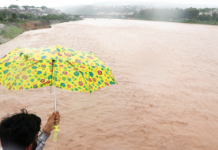
He said that in 2025, the floods were also one of the reasons for rise in waterborne diseases in J&K as the water was contaminated.
Sources said that non-seriousness of the concerned authorities and the poor implementation of central schemes is also the main reason due to which waterborne diseases in J&K have been witnessing steep rise every year.
A total of six hundred and six (606) water samples were collected from different areas across Jammu region out of which three and ninety nine (399) were found to be contaminated.
These water samples were collected in the last fourteen (14) months i.e. from January last year till February this year from different parts of the Jammu Province from different sources including schools, government offices, public places, hostels, border areas, Public Health Engineering (PHE) Deptt and other institutions.
Public health experts point out that the recent tragedy in Indore should serve as a wake-up call for other regions witnessing a surge in waterborne illnesses. They say that timely testing of water supplies, regular public advisories and swift corrective measures are critical to prevent outbreaks, particularly in areas where contamination risks increase during floods or due to ageing water supply infrastructure.
These water samples were tested in the last more than a year in the high-tech Microbiology Laboratory at Government Medical College and Hospital-Jammu (GMC&H-J), the premier hospital of this region.
“We get samples from government and other quarters and after testing, we send report to them along with suggestions and corrective measures to be taken to prevent waterborne diseases,” Head, Department of Microbiology, Dr Sandeep Dogra said, when contacted by the Northlines.