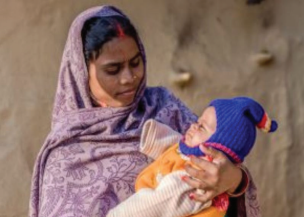
However, more determined efforts are needed to improve the lives of vulnerable
By Raju Kumar
BHOPAL: An economic survey is often regarded as a mirror of a state’s socio-economic condition. It does not merely present figures on growth rates, investment, and production; it also reflects the state’s vision and the direction in which it seeks to move its future. Alongside agriculture, industry, and infrastructure, the importance accorded to the social sector is equally telling. The Economic Survey of Madhya Pradesh for 2025–26 has now been presented. From the perspective of social development, a close look at the section on child development and protection reveals that while institutional expansion has taken place, important questions remain regarding coverage, outcomes, and emerging trends in the data.
The state currently operates 97,806 Anganwadi and mini-Anganwadi centres, through which services are being delivered to 6.158 million beneficiaries. This is undoubtedly an extensive network. However, when compared to the previous year’s 6.987 million beneficiaries, there is a decline of approximately 0.829 million. The drop is particularly noticeable in the 3–6 years age group. This is not merely a statistical fluctuation. It may point to changes in registration processes, eligibility criteria, data updates, or even a reduction in actual coverage. Notably, the survey does not provide a clear explanation for this decline, making the trend worthy of deeper scrutiny.
Child health screening data adds another dimension to the analysis. Between April 2025 and November 2025, 8.377 million children underwent health examinations. This figure exceeds the number of ICDS-registered children, suggesting that health services are not confined to Anganwadi centres but extend to schools and other platforms. However, among the screened children, 2.345 million required further examination or treatment, and 2.024 million received medical intervention. Additionally, 26,950 children underwent surgical procedures. In effect, nearly 28 percent of the screened children required some form of significant medical intervention. This indicates that while the screening system is active and widespread, child health challenges remain substantial.
In the area of neonatal health, 62 Special Newborn Care Units (SNCUs) and 200 Newborn Stabilization Units (NBSUs) are operational across the state. Between April and November 2025, 93,047 critically ill or low-birth-weight newborns received treatment. This reflects strengthened institutional capacity at the neonatal level, yet it also underscores the scale of risk and vulnerability during the earliest stage of life.
In terms of girls’ empowerment, the Ladli Laxmi Yojana and residential education models play a significant role. Through Kasturba Gandhi Balika Vidyalayas, near-universal coverage has been achieved, with 100 percent progress reported in Classes 6–12 and 99 percent in Classes 9–12. Furthermore, around 1.8 million girls received direct benefit transfers for sanitary napkins, a measure linked not only to health but also to dignity and regular school attendance. These initiatives demonstrate the state’s commitment to supporting adolescent girls through financial and institutional backing.
Yet broader educational indicators present a mixed picture. In 2023–24, the Gross Enrolment Ratio stood at 80.2 percent at the primary level, 67 percent at the secondary level, and 43.9 percent at the higher secondary level. This trend indicates a steady decline in enrolment as students progress to higher classes. It is at this juncture that schemes like Ladli Laxmi face their real test—whether they can ensure retention of girls at the secondary and higher secondary stages. In 2025–26, total student enrolment was recorded at 5.913 million, a positive sign in terms of outreach. However, enrolment alone does not guarantee learning outcomes, and issues of attendance and quality of education remain equally important.
Long-term health indicators show measurable improvement. The Maternal Mortality Ratio has declined from 379 in 2001–03 to 142 in 2021–23, a significant achievement. However, the 2047 target is to bring this figure below 20, indicating that substantial progress is still required. Similarly, the baseline Infant Mortality Rate stands at 41 per thousand live births, with an ambitious goal of reducing it below 5. While improvements are evident, the pace of reduction will need to accelerate to meet these targets.
Notably, the survey does not provide updated annual comparative data on malnutrition rates. The absence of clear year-on-year figures on stunting, wasting, or underweight prevalence creates an important data gap. If the decline in beneficiary numbers had been accompanied by clear evidence of improved nutrition outcomes, the trend could have been interpreted more positively. In the absence of such comparative data, careful and cautious evaluation is necessary.
Overall, the Economic Survey suggests that Madhya Pradesh has made efforts to strengthen institutional mechanisms for child development, healthcare, and girls’ education. The Anganwadi network, health screening campaigns, neonatal care infrastructure, and girl-focused welfare schemes are all active components of this framework. However, the decline in beneficiary numbers, the significant proportion of children requiring medical intervention, and the drop in enrolment at higher educational levels indicate that the next phase of policy must move beyond structural expansion toward improving quality, retention, and measurable outcomes. Ultimately, the true strength of economic development will be determined by how healthy, nourished, and educated the state’s children are. (IPA Service)