Says Katra to emerge as Global Spiritual Hub; Ropeway project won’t hit livelihoods of people
Jammu Tawi, Feb 18: Lieutenant Governor, Manoj Sinha today said that the soul of the union Territory is deeply rooted in India’s rich civilizational heritage, “so we have decided to channel Vedic education’s vast wisdom to the youth to nurture this legacy.”
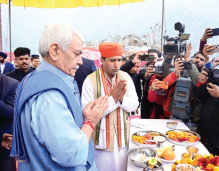
“Through the Gurukul initiative, Shri Mata Vaishno Devi Shrine Board (SMVDSB) will nurture youth who will uphold sacred traditions and perform religious practices with authenticity and understanding,” the Lieutenant Governor said after laying the foundation stone for the much-anticipated Sri Shankaracharya Temple in Katra town of Reasi district.
Perched on hillocks beside the revered Shri Mata Vaishno Devi Shrine, this project takes root after decades, realizing a vision first envisioned in the 1960s.
The Lieutenant Governor also shared his vision for the future of the holy town.
“I envision Katra carving a unique global identity in the coming years- drawing investments, superior infrastructure with Shri Mata Vaishno Devi Shrine Board support, booming business activity, and boundless opportunities for the youth,” he said.
Total expenditure for the temple complex, amounting to Rs. 31.51 crore, will be fully borne by Shri Mata Vaishno Devi Shrine Board.
The Lieutenant Governor announced that the Shrine Board will construct 50 commercial shops within the Temple complex, which will be allotted to the landowners who donated it for a sacred cause.
A Memorandum of Understanding (MoU) between the Shri Mata Vaishno Devi Shrine Board (SMVDSB) and the concerned landowners was executed in 2025, wherein the landowners have consented to donate 41 Kanals for sacred cause.
In the years ahead, the Sri Shankaracharya Temple will serve as a spiritual anchor for millions of devotees. It will be a living emblem of India’s eternal culture, collective faith, resilience, and profound spiritual-cultural consciousness.
“Devotees visiting Shri Mata Vaishno Devi for darshan will also come to Sri Shankaracharya Temple, generating significant economic momentum across the region. This influx will create employment opportunities, strengthen local enterprises, and inject fresh energy into overall regional development,” the Lieutenant Governor said.
During his visit to the holy town of Katra, the Lieutenant Governor presided over the ‘Samridh Nari, Samridh Bharat’ program at the Spiritual Growth Centre, where he interacted with the women entrepreneurs of Self-Help Groups of Reasi and adjoining areas.
The Lieutenant Governor reiterated the commitment of the Shri Mata Vaishno Devi Shrine Board towards keeping spiritual hubs vibrant while prioritizing every devotee’s comfort, safety, and dignity.
The Lieutenant Governor said that the Shri Mata Vaishno Devi Shrine Board, in a recent meeting, had approved key decisions to transform the Shrine and surrounding area into India’s premier vibrant spiritual hub.
He announced that the Shrine Board is enhancing the annual procurement of Puja Samagri and Prasad from SHGs from the current procurement value of Rs 5 crore to Rs 12 crore, significantly strengthening livelihood generation in the region.
“A standout measure was to prioritize purchases from local self-help groups, women, and young entrepreneurs to boost the regional economy. This initiative will onboard 20 additional self-help groups into the supply chain, providing livelihood support to around 1,500 women from villages in Reasi, Udhampur, and Jammu. Total annual purchases from these groups will be scaled to Rs. 50 crore in coming years,” the Lieutenant Governor said.
The Lieutenant Governor further highlighted that the Shri Mata Vaishno Devi Shrine Board envisions building a world-class cultural and spiritual center—one that provides society with a foundation of lasting stability.
Talking to the reporters after laying the foundation stone of the temple, LG Sinha said, “Just like Somnath Mandir and Statue of Unity, here too a museum will be built along with a narmitti (holy water) site, so devotees from all over the country can visit and experience it.”
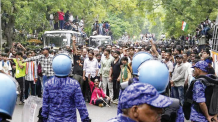
He also highlighted accessibility challenges for pilgrims visiting Devi Mata Vaishno Devi and Bhagwan Bholenath, noting that many devotees found it difficult to reach these sacred sites. “On the ropeway project and other infrastructure developments, he stressed that the livelihood of local people of Katra will not be affected.”