By Kalyani Shankar
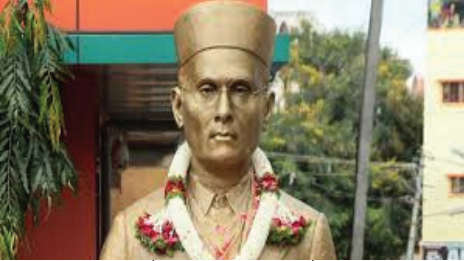
Demands to award the Bharat Ratna to Hindu thinker Vinayak Damodar Savarkar have revived an ongoing political debate between the Congress-led Opposition and the BJP, highlighting the deep divisions over his ideas, beliefs, and role in India’s independence movement.
The issue first gained major political traction in 2019, when the BJP’s Maharashtra unit recommended the Bharat Ratna to Savarkar, while the Congress sharply hit out. The demand resurfaced in 2024 as well, when Shiv Sena (UBT) chief Uddhav Thackeray questioned Why the Bharat Ratna award was not bestowed upon Savarkar.
Who is Savarkar and why is he controversial? Born in 1883 in Bhagur near Nashik to Damodar and Radhabai Savarkar, his early life was marked by survival and pragmatic choices, such as negotiating with the British and submitting mercy petitions, which shaped his complex legacy.
Many people oppose awarding the Bharat Ratna to Savarkar because of the mercy petitions he wrote to the British from the Cellular Jail in Andaman. Critics believe these petitions show a weakness that outweighs years of sacrifice.
Wanting to end torture and return to normal life is a natural human desire. Savarkar chose to remain alive rather than become a martyr. He believed that a living revolutionary, even one who was restricted, could do more for the nation than a dead hero in the Andamans. Savarkar did not request an apology in his petitions to the British government. As a skilled lawyer, he sought clarification on the prisoners’ status. He stated that they were confined in this dreadful place without knowing whether they were considered general convicts or political prisoners. Savarkar was released on the condition that he could not engage in politics and had to stay within the district of Ratnagiri. Under the Indian Evidence Act,; the testimony of an accomplice must be independently verified to be credible. The prosecution failed to provide this.
He presented himself as a social reformer dedicated to eradicating untouchability, an issue he worked on extensively. However, he also maintained underground support for the revolutionary movement. He established a temple in Ratnagiri called Patit Pavan, which was open to people of all communities and castes. This initiative alarmed upper-caste Hindus. Latest documents from the Nehru Archive reveal that India’s first Prime Minister, Jawaharlal Nehru, advised President Dr Sarvepalli Radhakrishnan against awarding the Bharat Ratna—the country’s highest civilian honour—to Vinayak Damodar Savarkar. This insight adds depth to the ongoing debate surrounding Savarkar’s legacy and the political divisions it has ignited.
In June 1963, Nehru wrote, “I am returning your letter suggesting the Bharat Ratna be awarded to Shri Savarkar. Although he contributed to the freedom movement, he later became controversial. I do not think we should accept this suggestion of.”Mahasabha.”
While many reformers of the era sought to uplift “untouchables” within the framework of Hinduism, Savarkar was a rationalist who sought to dismantle the structure entirely. He did not just preach; he operationalised his beliefs. Many reformers of the time sought to help “untouchables” within Hinduism. In contrast, Savarkar wanted to change the system completely. He not only preached his beliefs but also took action to support them.
He constructed the Patit Pavan Mandir, one of the first temples in India to welcome people from all castes, including those considered untouchables at the time. By appointing a Dalit priest and promoting inter-caste dining and marriage, he sought to challenge social norms. His efforts aimed to inspire respect, foster equality among diverse communities, and promote social reform.
The public record shows that Savarkar was arrested and charged with conspiracy. Still, on February 10, 1949, the Special Court at the Red Fort, presided over by Judge Atma Charan, acquitted him after reviewing all the evidence, including testimony from approver Digambar Badge, underscoring the legal process involved.
Under the Indian Evidence Act, the evidence of an accomplice must be corroborated by independent evidence to be credible. The prosecution failed to provide this.
The grandson of Savarkar, Rajendra Savarkar, has called on the Central government to recognise his grandfather’s title of ‘Swatantraveer’, saying it would be akin to the title of ‘Mahatma’ given to Mohandas Karamchand Gandhi.
Many people oppose awarding Savarkar the Bharat Ratna. These include the Congress Party, Left parties, and some opposition groups. The Shiv Sena has been pushing for this honour for a long time, and the BJP also supports it. During Vajpayee’s time as Prime Minister, they considered awarding it to Savarkar but decided against it. Since Modi became Prime Minister, the Shiv Sena has continued to urge the BJP to grant this recognition, but it still has not happened in the last 11 years.
Savarkar has many supporters but also many opponents. The question of who will win may be a million-dollar question, but as the indications suggest, Prime Minister Narendra Modi may finally take a decision this year in favour of awarding posthumous Bharat Ratna to Savarkar. (IPA Service)