Right moves could restore Country’s place in oil market
By K Raveendran
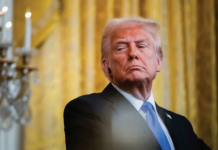
President Donald Trump’s intensified focus on Venezuela over oil underscores the strategic centrality of the South American nation’s petroleum wealth in shaping U.S. policy and global energy markets. For decades, Venezuela’s vast oil reserves, once a cornerstone of its economy, have languished under mismanagement, sanctions, and infrastructural decay.
Yet Trump’s recent actions — from calling on the world’s oil majors to return to Venezuela with assurances of safety to asserting U.S. control over Venezuelan oil flows — reveal a calculated bid to harness those resources. The question now is whether this gamble can restore production to early 21st-century levels near 3 million barrels per day and, if so, how rapidly and at what cost.
Venezuela holds more proven oil reserves than any other nation, with estimates around 303 billion barrels. This figure represents roughly 17 percent of global crude reserves, dwarfing major producers and conferring a theoretical long-term influence on oil markets. Under previous administrations, including during the late 1990s and early 2000s, Venezuela’s daily crude output approached or exceeded 3 million barrels, making it one of the world’s leading exporters. Today, production has collapsed to under a million barrels a day, a fraction of its potential, hampered by underinvestment, political turmoil, sanctions and the deterioration of state-owned Petróleos de Venezuela S.A.
The Trump administration’s approach combines geopolitical assertiveness with an appeal to private capital. In recent meetings with executives from Chevron, ExxonMobil, and ConocoPhillips, Trump has encouraged a massive reengagement with Venezuelan oil assets, promising “complete safety and security” for operations and urging at least $100 billion of industry investment without U.S. government capital. This overture reflects both a desire to revive production and an ambition to integrate Venezuelan crude into global markets under terms favourable to U.S. interests. It also serves broader geopolitical aims, including countering Chinese and Russian influence in the region.
The appeal to oil majors, however, has met measured responses. Chevron, the only major U.S. company with ongoing operations in Venezuela through joint ventures with PDVSA, has expressed readiness to increase production by perhaps 50 percent in the next 18–24 months if regulatory and operational conditions permit. But firms like ExxonMobil have been more circumspect, with leadership describing Venezuela as “un-investable” without substantial legal and commercial reforms. Past expropriations and unresolved compensation claims have left lingering apprehension about committing vast sums to a nation long beset by political instability.
Bringing Venezuela back to something akin to its 1970s production peak is far more than a symbolic aspiration; it encapsulates the daunting challenges ahead. Analysts suggest that incremental improvements to existing fields and pipelines could be achieved with tens of billions of dollars in capital, potentially lifting output by several hundred thousand barrels per day within a few years. Yet reaching 3 million barrels per day — more than triple current levels — would likely require sustained investment well beyond the conservative estimate of $50 billion, possibly stretching into the low hundreds of billions over a decade or more. That reflects not simply the capital cost of drilling and facilities but the need to overhaul power infrastructure, logistics, maintenance and the institutional framework governing the energy sector.
The nature of Venezuelan crude itself adds complexity. Much of the country’s oil is heavy and sour, requiring diluents and specialized refining capacity. While U.S. Gulf Coast refineries are relatively well equipped to process such grades, the economics of heavy crude remain less attractive than lighter alternatives produced elsewhere. This factor, coupled with volatile global oil prices and competitive supply from other regions, weakens the near-term financial incentive for oil majors to plunge into Venezuela’s deep problems without ironclad guarantees and stable commercial terms.
Beyond economics, the political and security environment will test Trump’s assurances of safety for investors. The abrupt military operation that led to Nicolás Maduro’s capture, and the administration’s subsequent claim of indefinite control over Venezuelan oil sales, have drawn sharp criticism globally. Regional leaders and international observers warn that such interventions undermine sovereignty and risk destabilising an already fragile country. While Trump frames the move as beneficial for Venezuelans and a pathway to energy security, critics see it as a strategic resource grab with uncertain outcomes.
Internally, Venezuela faces structural hurdles that cannot be solved by outside capital alone. Decades of underinvestment and political interference have eroded the expertise and infrastructure once underpinning PDVSA’s operations. Chronic blackouts, fuel shortages, and repeated refinery breakdowns are symptomatic of deeper systemic failures that investors must overcome. Without robust governance reforms and credible legal protections, multinational corporations may be reluctant to commit the level of resources required for a full industrial renaissance.
The broader implications of revitalizing Venezuela’s oil production extend well beyond its borders. Should output climb significantly, global oil markets could see downward pressure on prices, benefiting consumers but potentially squeezing profit margins for other producers, including U.S. shale operators. The introduction of substantial Venezuelan crude into the market might also reshape trade flows, particularly if links with Chinese refiners — longstanding buyers of Venezuelan oil — are disrupted or redirected.
Trump’s oil-centric strategy carries high risks and uncertain rewards. It aims to capitalize on Venezuela’s geological bounty while reshaping geopolitical alignments in the Western Hemisphere. If successful, it could reinvigorate a languishing sector, reduce Venezuelan economic dependency on a single commodity, and reinforce U.S. influence over energy markets. Yet the path to a meaningful production rebound is steep, requiring not just capital but political stability, institutional reforms, and sustained commitment from both the Venezuelan state and foreign investors. (IPA Service)