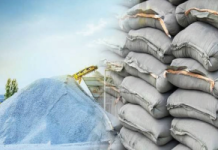
New Delhi can effectively influence supply chain to emerge as an eventual exporter
By T N Ashok
In the unassuming coastal sands of Kerala and Tamil Nadu lie minerals with an outsized claim on the future. Rare earth elements—seventeen chemically similar metals with unpronounceable names like neodymium, dysprosium, and praseodymium—are the sinews of modern civilization.
Tshey power the motors in electric vehicles, stabilise wind turbines, guide precision missiles, and enable the magnets that make smartphones vibrate. Control these elements, and you control the arteries of the green-energy transition and the nervous system of military hardware.
For three decades, one country has held that control with an iron grip: China. Beijing accounts for roughly 60% of global rare-earth mining and a staggering 90% of processing—the stage where raw ores become valuable metals and alloys. The world watched as China built this monopoly, first through permissive environmental standards and cheap labour, then through ruthless vertical integration.
By the time Western nations recognised the danger, it was too late. China had become the sole pharmacy in a town hooked on its product.
Now India, often dismissed as a perpetual latecomer to industrial revolutions, is attempting something audacious: building an alternative rare-earth supply chain nearly from scratch. Its $890m scheme to manufacture 6,000 tonnes of Rare Earth Permanent Magnets annually is more than industrial policy—it is industrial defiance.
To understand India’s ambition, one must first grasp the economics of rare earths. The value chain has four stages: mining, refining, magnet manufacturing, and component integration. Mining accounts for a mere sliver of final value. Refining and magnet production—stages demanding precision metallurgy, environmental controls, and technical expertise—capture 50% to 70% of total worth.
For years, India excavated rare-earth ores from its beaches and promptly shipped them to China for processing. It then imported finished magnets at markup. This was akin to growing grapes, exporting them for pennies, and buying back champagne at luxury prices. India’s defence sector, its nascent electric vehicle industry, and its renewable energy programmes all depended on magnets made in Guangdong and Jiangxi.
When China imposed export restrictions on rare-earth materials in early 2024—ostensibly for national security—India felt the pinch. Prices spiked. Delivery schedules slipped. The vulnerability was laid bare: India’s strategic autonomy rested on Beijing’s goodwill.
The new scheme, backed by $780m in production-linked incentives, aims to reverse this dependency. India plans to develop domestic refining capacity, manufacture high-performance sintered magnets, and integrate them into everything from Tejas fighter jets to Tata electric buses. If successful, the entire value chain—from monazite extraction to missile guidance systems—would sit within Indian borders.
Pakistan occasionally surfaces in rare-earth discussions, typically when Chinese geologists discover deposits in Balochistan or Gilgit-Baltistan. Yet Pakistan’s rare-earth story is more aspiration than achievement. Its reserves remain underexplored, fragmented across unstable provinces, and entirely dependent on Chinese capital and expertise. Islamabad lacks the industrial base, the political stability, and—crucially—the long time horizons required to build a competitive rare-earth industry.
India’s advantage is structural. It possesses the world’s fifth-largest rare-earth reserves, a functioning mining bureaucracy, and established public-sector enterprises like Indian Rare Earths Ltd, which has extracted monazite since the 1950s. More importantly, India commands the diplomatic reach and capital markets to finance an integrated supply chain. Pakistan, by contrast, must route every decision through Beijing, which has no incentive to nurture a competitor to its own monopoly.
India’s strategy effectively eliminates Pakistan from the race before it begins. While Islamabad negotiates memoranda of understanding, New Delhi is pouring concrete and signing offtake agreements.
One inconvenient reality shadows India’s plans: China has secured informal arrangements that restrict India’s ability to export rare-earth intermediates to the United States. These agreements, never publicly codified, reflect Beijing’s determination to starve the American military-industrial complex of alternative suppliers.
India’s response has been to diversify its customer base. Europe’s Critical Raw Materials Act, passed in 2023, explicitly seeks non-Chinese suppliers for strategic minerals. Japan, still scarred by China’s 2010 export embargo during a territorial dispute, is desperate for alternatives. South Korea, Australia, and Gulf states—particularly the UAE and Saudi Arabia—are all investing heavily in renewables and advanced manufacturing. Each represents a potential buyer of Indian magnets.
India has also adopted a two-front strategy: it is acquiring rare-earth assets abroad while building processing capacity at home. Through KABIL, its state-backed mining consortium, India is co-developing deposits in Zambia, Tanzania, Namibia, Argentina, Bolivia, and Peru. These partnerships serve dual purposes: they guarantee long-term ore supplies and build political capital with the Global South, where China has long enjoyed a head start.
Unlike Beijing’s model—which often involves exclusive extraction rights and infrastructure-for-resources swaps—India offers joint processing, revenue-sharing, and the promise of selling finished magnets back to partner nations at stable prices. This is a softer, more pluralistic approach, designed to appeal to countries wary of Chinese dominance.
If India can position itself as a reliable alternative supplier to Europe, East Asia, the Gulf, and Latin America, it stands to earn significant foreign exchange. The global market for rare-earth magnets is projected to exceed $30bn by 2030. Capturing even 10% would represent a substantial boost to India’s manufacturing exports.
Ambition, however, does not guarantee success. India faces formidable challenges. Refining rare earths requires mastery of complex chemical processes. China spent decades perfecting these techniques. India is attempting to compress that learning curve through technology transfers and hiring specialists—many of them Chinese-trained engineers.
Rare-earth refining generates toxic waste. India’s patchy environmental enforcement and contentious land acquisition processes could delay projects. Public opposition in Kerala or Odisha could stall mining expansions.
Building a globally competitive rare-earth industry demands sustained investment over a decade or more. India’s fiscal space is limited, and private investors remain cautious about long-gestation projects.
Beijing will not surrender market share quietly. It could flood global markets with subsidised magnets, undercutting Indian producers. It could restrict exports of critical refining equipment. It could pressure African and Latin American partners to choose sides. China’s state-owned enterprises have deeper pockets and longer political reach than India’s public sector.
Most insidiously, China could exploit India’s own regulatory weaknesses. Delays in environmental clearances, land disputes, and bureaucratic infighting have killed Indian infrastructure projects before. If China can amplify these friction points—through proxies, cyber disruption, or strategic misinformation—it could derail India’s plans without firing a shot.
For the United States, India’s rare-earth push is both opportunity and complication. Washington wants alternatives to China, but it also wants control. An India that exports to Europe and Asia—but not to America—complicates Pentagon procurement. Yet the U.S. cannot publicly oppose India’s efforts without appearing hypocritical.
For China, India represents the first credible Asian challenger to its monopoly. If New Delhi succeeds, it will fracture Beijing’s pricing power and embolden other nations—Vietnam, Kazakhstan, even Mongolia—to develop their own rare-earth industries.
For Pakistan, the message is stark: the rare-earth race is over before it began. Islamabad lacks the scale, stability, and independence to compete. Its dependence on China ensures it will remain a client, not a rival.
India’s rare-earth strategy, then, is not merely about magnets or missiles. It is about demonstrating that middle powers can still shape global supply chains—if they possess the will, the capital, and the patience. In the geopolitics of the 21st century, the countries that refine rare earths may wield as much influence as those that refine oil once did.
Whether India’s $890m gambit succeeds remains uncertain. But the attempt itself has already changed the calculation. The world is no longer solely dependent on Chinese magnets. And that, in itself, is a form of power. (IPA Service)