PM Modi, VP Radhakrishnan congratulate scientists
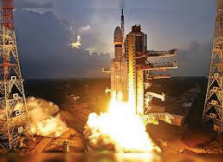
Sriharikota (AP), Nov 2: In a major milestone, ISRO scientists successfully conducted a crucial experiment on the indigenously developed C25 cryogenic stage during the LVM3-M5 mission, which launched India’s heaviest communication satellite CMS-03 (GSAT-7R) into orbit on Sunday.
ISRO Chairman V. Narayanan announced that after placing the 4,410-kg satellite into the Geosynchronous Transfer Orbit (GTO), the team reignited the thrust chamber of the cryogenic stage — a first for the LVM3 “Bahubali” rocket.
“This is a significant experiment that will provide valuable data for restarting the cryogenic stage in future missions,” Narayanan said. “It enhances mission flexibility, allowing us to inject multiple satellites into different orbits.”
Mission Director T. Victor Joseph lauded the flawless performance of the launch vehicle, marking the eighth consecutive success for LVM3. “The vehicle lifted the heaviest communication satellite ever launched from Indian soil. Special appreciation to all team members, development agencies, industry partners, and quality assurance groups,” he said.
Explaining why there was a brief pause before celebrations, Narayanan clarified that the team was waiting to complete the cryogenic experiment after the satellite’s separation. “We patiently waited for CMS-03 to separate before performing the test,” he noted.
The CMS-03 satellite, designed to bolster communication for the Indian Navy, is expected to enhance connectivity and maritime domain awareness across the Indian Ocean Region — a step forward in Aatmanirbhar Bharat.
Prime Minister Narendra Modi congratulated ISRO on the achievement, calling it “another proud moment for India’s space sector.” He wrote on X: “Our space sector continues to make us proud! Powered by our scientists, it symbolizes excellence, innovation, and national progress.”
Vice President C.P. Radhakrishnan hailed the launch as a “remarkable milestone in space exploration,” adding that the satellite will “strengthen India’s maritime communication and security.”
Lt Gen A.K. Bhatt (Retd), Director General of the Indian Space Association (ISpA), said CMS-03 would be a “game-changer for India’s maritime and national security,” enhancing secure communication channels and boosting private sector participation in the space ecosystem.
Narayanan added that ISRO plans seven more launches in the next five months, signalling an intensive phase of space activity ahead.