New Delhi, Oct 24: India on Friday criticised efforts by Pakistan to shield a terror outfit at the United Nations Security Council (UNSC), pointing out that such moves have contributed to the gridlock and inefficiency in the global body’s work. The remarks came in the context of the Pahalgam terror attack, for which the Resistance Front (TRF), a proxy of Lashkar-e-Taiba (LeT), had claimed responsibility.
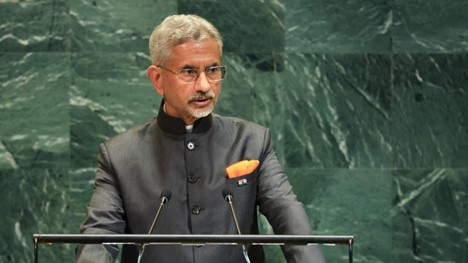
Speaking at an event marking the 80th anniversary of the United Nations, External Affairs Minister S. Jaishankar said that attempts to equate victims and perpetrators of terrorism in the name of global strategy are deeply troubling. Though he did not explicitly name Pakistan, his comments were widely seen as a reference to the country, which is a current member of the UNSC and had reportedly tried to remove TRF’s mention from the Council’s statement condemning the attack.
“Few examples are more telling about the challenges facing the UN than its response to terrorism. When a sitting Security Council member openly protects the very organisation that claims responsibility for a barbaric terror attack such as at Pahalgam, what does it do to the credibility of multilateralism?” Jaishankar asked.
He said that the UN’s debates have become increasingly polarised, its work visibly gridlocked, and meaningful reform is often blocked using the reform process itself. The external affairs minister emphasised that sustaining the UN while seeking its reinvention is a major challenge before the world.
Highlighting the dangers of equating victims and perpetrators in global discourse, Jaishankar said: “When self-proclaimed terrorists are shielded from the sanctioning process, what does it say about the sincerity of those involved?” He stressed that such actions undermine the UN’s credibility and highlight the urgent need for reform in addressing terrorism.
Pakistan, which held the UNSC presidency in July 2025, attempted to downplay TRF’s role in the Pahalgam attack in official statements, according to officials. The Security Council comprises 15 members, including five permanent members — China, France, Russia, the United Kingdom, and the United States — while ten non-permanent members are elected for two-year terms by the General Assembly, rotating the presidency monthly.
Jaishankar also highlighted broader challenges facing the UN, noting that the maintenance of international peace and security has often become lip service, and that development and socio-economic progress, especially in the Global South, face severe setbacks. He pointed to the slowing of the SDG Agenda 2030, trade barriers, supply chain dependencies, and political domination as key metrics of global distress.
Yet, despite these challenges, Jaishankar stressed that commitment to multilateralism must remain strong. “However difficult, the commitment to multilateralism must remain strong. However flawed, the United Nations must be supported in this time of crisis,” he said, urging continued engagement to achieve the Sustainable Development Goals (SDGs) — the global framework for a better and more sustainable future. (Agencies)