Article by :- Lt Col Ankit Sharma
In recent years, the term “super-food” has become a buzz word in the world of nutrition and wellness. From quinoa to chia seeds, exotic imports have often been celebrated as miracle foods, loaded with nutrients and hailed for their health benefits. India, with its rich agricultural heritage, has long nurtured a variety of indigenous grains that were once staple in every household. Among them, millet’s, a group of small-seeded grasses are now stepping back into the spotlight. Once seen as the food of the poor, millet’s are being rediscovered as nutritional powerhouses that are perfectly suited for modern health needs.
Could these humble, ancient grains be the true super-foods we’ve been overlooking all along? It’s time to take a closer look at millet’s, our forgotten heroes of health and understand why the world is finally waking up to their value.
WHAT ARE SUPERFOODS ?
Super-foods are foods that are exceptionally rich in nutrients, offering maximum health benefits in relatively small quantities. They are usually packed with vitamins, minerals, antioxidants and compounds that support immunity, reduce inflammation and promote overall well-being. While no single food is magic bullet, super-foods are valued for their ability to boost health when included as part of a balanced diet.
POPULAR SUPERFOODS
In global wellness circles, several foods have gained fame as “ super-food”. Some of the most popular include:
- Quinoa– A protein-rich pseudo grain, often hailed as a complete protein.
- Chia Seeds– Rich in omega-3 fatty acids, fiber and antioxidants.
- Blueberries– Known for their high antioxidant content.
- Avocado– Full of healthy fats, fiber and vitamins.
- Green Tea– Packed with polyphenols that fight free radicals.
While these foods have undeniable benefits, most of them are imported and often expensive in India, making them less accessible for the common person.
WHAT MAKES MILLETS A SUPERFOOD
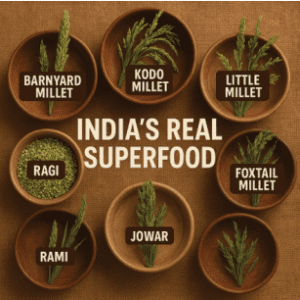
Millets are small seeded grains like ragi, bajra, jowar, foxtail millet and little millet. They were once staple foods in India but gradually lost popularity to rice and wheat. Today nutritionist and health experts are reviving their importance and for good reason.
- Nutrient Dense– Rich in iron, calcium, magnesium and B vitamins.
- High in Fiber– Aids digestion, prevents constipation and keeps you fuller for longer.
- Low Glycemic Index– Excellent for diabetics as they release sugar slowly.
- Gluten-Free– A safe alternative for people with gluten sensitivity.
- Eco-Friendly Crop– Grows with minimal water, making them sustainable and climate resilient.
POPULAR MILLETS AND THEIR SUPER QUALITIES
- Ragi(Finger Millet): Extremely rich in calcium and iron, great for bone health and anemia prevention.
- Bajra(Pearl Millet): High in protein, iron and magnesium, supports heart health and improves energy.
- Jowar(Sorghum): A powerhouse of antioxidants, fiber and protein; aids in digestion and cholesterol control.
- Foxtail Millet: Rich in complex carbs and iron; ideal for diabetics and weight watchers.
- Little Millet: Packed with fiber and B vitamins; supports metabolism and gut health.
- Barnyard Millet: Very high in iron; helps fight fatigue and is beneficial for women’s health.
- Kodo Millet: Aids in managing lifestyle diseases like diabetes and obesity due to its low glycemic index.
By rotating these millet’s in our daily meals, we can enjoy diverse nutrition far richer than a rice-wheat heavy diet.
MYTHS ABOUT MILLETS
Despite their benefits, several myths surround millet’s that prevent people from fully embracing them.
- “Millet’s are only for the poor”. Once considered a rural staple, millet’s are now celebrated globally as premium health foods.
- “Millet’s are hard to cook”. They can be cooked just like rice or turned into rotis, dosas, khichdi and even deserts.
- “Millet’s cause digestive problems”. Their high fiber may feel heavy initially, but soaking or fermenting makes them easy to digest.
- “ Rice and wheat are superior”. Millet’s often surpass rice and wheat in terms of minerals, fiber and protein quality.
CONCLUSION
So, are millet’s the real super-food? The answer is a resounding yes. For centuries, our ancestors relied on these humble grains to stay strong, active and resilient. From the farmer’s field to the royal kitchen, millet’s nourished India in ways that rice and wheat never could.
Unlike imported “ superfoods”, millets are ours, local, affordable, climate friendly and deeply woven into our food heritage. They embody the Indian philosophy of simple living, wholesome eating and respect for nature. As we rediscover these ancient grains, it is time to bring them back to our plates, not just as a trend, but as a way of life. After all, the true super-food for India’s future may well be the same grain that sustained its past- Millet’s.
One who eats them every day,
With light food and a mind so clear,
Finds both body and soul free from fear