Ravi Rohmetra
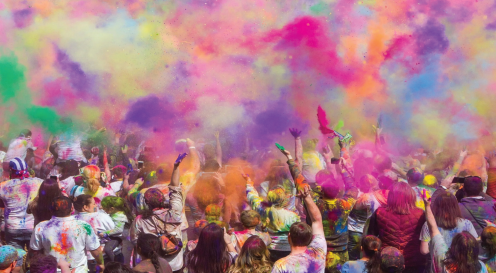
Every spring, India and many parts of the world come alive with vibrant hues as people celebrate Holi, the Hindu festival of colors. This festival, observed on the full moon day of the Hindu month of Phalguna, symbolizes joy, unity, and the triumph of good over evil. On this special day, social distinctions such as caste, gender, age, and status dissolve in the spirit of festivity, allowing everyone to partake in the jubilant throwing of colors.
Holi is deeply rooted in Indian mythology, with varying traditions across different regions. It is widely associated with the legend of Hiranyakashipu, a demon king who sought to kill his own son, Prahlada, for his unwavering devotion to Lord Vishnu. Enlisting the help of his sister, Holika, Hiranyakashipu devised a plan to burn Prahlada alive. However, divine intervention led to Holika perishing in the fire while Prahlada remained unharmed. Later, Vishnu appeared in his Narasimha avatar and destroyed Hiranyakashipu, marking the ultimate victory of righteousness. To commemorate this event, large pyres are lit on the eve of Holi, symbolizing the burning away of evil.
Another popular legend linked to Holi is the divine love story of Lord Krishna and Radha. Krishna, embarrassed by his dark complexion compared to Radha’s fair skin, playfully smeared color on her face. This playful act is believed to have inspired the tradition of throwing colored powders and water during Holi. The festival’s spirit of joyous mischief reflects Krishna’s playful nature, making it a day of uninhibited revelry.
Historical and Cultural Significance
Holi is an ancient Hindu festival with references in sacred scriptures dating back centuries. Mentions of the festival can be found in texts such as the Jaimini Purva Mimamsa Sutras and the Kathaka-Grhya-Sutras. More elaborate descriptions appear in ancient works like the Narada Purana and the Bhavishya Purana. The renowned Sanskrit poet Kālidāsa, in the 4th century, also referenced Holi in his literary works.
The festival gained prominence during the Gupta period and was later documented in the 7th-century Sanskrit play Ratnavali by King Harsha. By the 17th century, European traders and British colonial officials took note of Holi, with early editions of the Oxford English Dictionary listing its various phonetic spellings such as “Houly” (1687), “Huli” (1789), and “Hoolee” (1825).
Holi’s cultural significance extends beyond just mythology and history. It represents renewal, unity, and the breaking down of social barriers. The festival is seen as an opportunity to forgive and forget past grievances, reconcile with friends and family, and embrace a fresh start. It also marks the onset of spring, a time of new beginnings and agricultural prosperity.
Regional Celebrations of Holi
Holi is celebrated with unique customs and traditions across India and in various parts of the world where the Indian diaspora resides. The festivities vary from region to region, each with its own distinct rituals and practices.
Braj Region (Mathura and Vrindavan)
The Braj region, which includes Mathura, Vrindavan, Nandgaon, Barsana, and Gokul, is particularly famous for its grand Holi celebrations. These towns, deeply associated with the life of Lord Krishna, host elaborate festivities such as Lathmar Holi, where women playfully hit men with sticks, reenacting a mythological event involving Krishna and Radha’s companions.
North India
In North India, Holi is marked by enthusiastic gatherings where people throw colored powders, dance to the beat of drums, and sing traditional folk songs. Cities like Delhi, Lucknow, and Varanasi witness lively street processions, with people enjoying festive treats like gujiya, thandai, and pakoras.
Bihar
In Bihar, Holi is known as Phaguwa, and the legend of Holika remains central to the celebrations. Bonfires are lit on Phalgun Purnima, symbolizing the victory of good over evil. The following day, people apply colors on each other, sing Bhojpuri folk songs, and enjoy traditional delicacies. The Holi Milan tradition, where families and friends visit each other, is an integral part of the celebrations.
Jammu and Kashmir
In Jammu and Kashmir, Holi is a joyous occasion marked by the throwing of colors, water splashes, and enthusiastic gatherings. The festival also signals the beginning of the harvesting season, adding an agricultural significance to the celebrations. Traditional songs, dances, and local delicacies enhance the festive spirit.
Uttar Pradesh
In Kanpur, Holi celebrations extend for an entire week, culminating in the grand Ganga Mela. This fair, started by freedom fighters during British rule, is an important part of the region’s history. In Gorakhpur, the Holi Milan tradition strengthens community bonds, as people visit each other’s homes to exchange greetings and apply colors.
Western and Southern India
In Maharashtra, Holi is associated with Shimga, celebrated with great enthusiasm, particularly by the Marathi community. People engage in singing, dancing, and traditional processions. In Gujarat, the festival is marked by the breaking of the matki (earthen pot), a playful tradition inspired by Krishna’s childhood antics.
In South India, Holi is less widely celebrated compared to the North but is observed in some parts of Tamil Nadu, Karnataka, and Andhra Pradesh with temple rituals, cultural performances, and special offerings.
Holi Celebrations Outside India
Holi has transcended Indian borders and is celebrated in Nepal, Bangladesh, Pakistan, and countries with significant Indian communities such as the United States, Canada, the United Kingdom, Australia, and the Caribbean. The festival has gained global recognition, with people of all backgrounds participating in color runs, cultural programs, and musical events inspired by Holi.
Rituals and Festivities
The rituals of Holi span two days. The first evening, known as Holika Dahan, involves lighting bonfires to signify the burning away of negativity. People gather around the fire, chant prayers, and perform rituals. The second day, Rangwali Holi, is the main celebration, where people splash colors, dance, and revel in the festive spirit.
Beverages like Thandai (a spiced milk drink often mixed with bhang), along with sweets such as gujiya, malpua, and dahi vada, add to the festive cheer. Music, dance, and laughter fill the air, making Holi one of the most exuberant festivals in the world.
Conclusion
Holi is more than just a festival; it is a celebration of life, unity, and positivity. It brings people together, dissolving social boundaries and spreading joy. Whether it is through the mythological stories of Prahlada and Krishna, the historical significance, or the vibrant festivities, Holi continues to be a cherished occasion that resonates across cultures and generations. As the colors of Holi paint the streets and hearts of people worldwide, they remind us of the beauty of togetherness, love, and renewal.